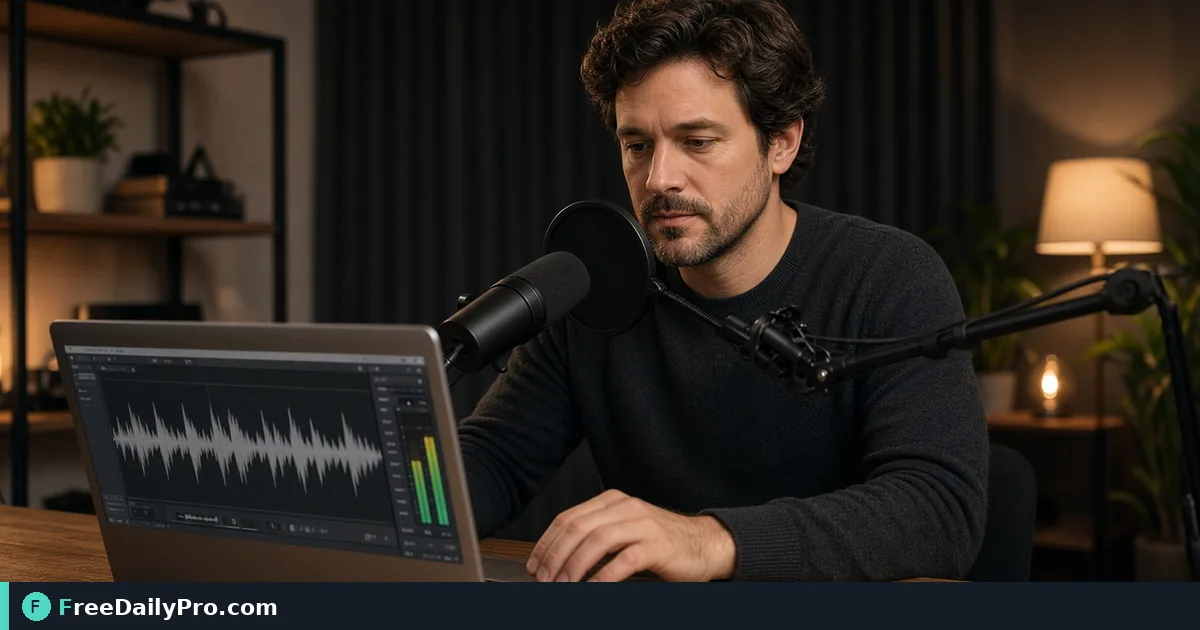
Even Out Loud and Quiet Audio Before You Publish
Use Audio Normalizer for podcast production. Workflow for three remote interviews into one 42-minute episode. Steps, mistakes, limits.
Before anyone signs off on podcast production work, watch for chapter two shouts over chapter one. Audio Normalizer is the step that turns that mess into a checked result for three remote interviews into one 42-minute episode, built for podcasters among FreeDailyPro's 200+ professional tools.
The clip below walks through Audio Normalizer on a realistic task that matches three remote interviews into one 42-minute episode for case 5.

Why Audio Normalizer belongs in this podcast production path
This article trains one job only for audio-normalizer (guide 5): three remote interviews into one 42-minute episode. Readers are podcasters. When audio-normalizer output looks wrong, first re-check whether the goal was "even levels on earbuds and phone speakers" and whether inputs used anchors near 3, 42, and 2 (minutes). The failure mode to refuse on pass 5 is chapter two shouts over chapter one.
Success on Audio Normalizer means a finished artifact you can defend in podcast production: even levels on earbuds and phone speakers. Practical anchors for this case sit around 3, 42, and 2 (minutes). If those anchors are missing for three remote interviews into one 42-minute episode, stop before you burn a trial usage on half-ready data for audio-normalizer.
What to stage before opening Audio Normalizer
Write a one-line done definition for audio-normalizer that matches "even levels on earbuds and phone speakers" before guide step 5. Stage every input Audio Normalizer will consume for three remote interviews into one 42-minute episode so the browser pass is intentional for podcasters. Note any destination rules that can reject a audio-normalizer export in podcast production after case 5.
Keep neighbor tools only for real blockers after Audio Normalizer on three remote interviews into one 42-minute episode: Extract Audio, Audio Trimmer, Audio Converter. Browse the audio tools category when a related step is required after the audio-normalizer pass for even levels on earbuds and phone speakers. Queue audio-normalizer runs so each of the 10 trial usages hits ready inputs for three remote interviews into one 42-minute episode rather than placeholders.
Steps on Audio Normalizer for case 5
- Pin the done line for this podcast production run of audio-normalizer: even levels on earbuds and phone speakers.
- Assemble inputs for the job on Audio Normalizer: three remote interviews into one 42-minute episode.
- Bring up Audio Normalizer at https://www.freedailypro.com/tool/audio-normalizer for podcasters.
- Key in production values with anchors near 3, 42, and 2 (minutes) for three remote interviews into one 42-minute episode.
- Trigger once; confirm you did not hit chapter two shouts over chapter one on the audio-normalizer output.
- Pull or copy with a name that includes
audio-normalizerand today's date for case 5. - Cross-check the way podcasters will receive the podcast production packet (second device if relevant).
- Retain settings so a teammate can repeat the audio-normalizer path for three remote interviews into one 42-minute episode next week.
Recheck cadence for podcast production on audio-normalizer
After any process change in podcast production, re-run one golden case through Audio Normalizer for three remote interviews into one 42-minute episode (label it golden-5). Golden cases for audio-normalizer beat memory when podcasters rotate on this workflow. Teach a teammate by having them complete three remote interviews into one 42-minute episode while you only watch for skipped verification of "even levels on earbuds and phone speakers" on audio-normalizer.
Store the golden-5 inputs next to the audio-normalizer export so next month's operator can prove even levels on earbuds and phone speakers without guessing anchors near 3, 42, and 2 (minutes).
Inputs that look fine but break audio-normalizer
- Values for Audio Normalizer copied from chat with hidden characters that shift 3, 42, and 2 (minutes) on case 5.
- Files named generically (download, IMG_####) with no
audio-normalizeror project tag for three remote interviews into one 42-minute episode. - Mixing demo placeholders with production rows in the same audio-normalizer session aimed at even levels on earbuds and phone speakers.
- Assuming last week's portal cap still applies to today's audio-normalizer export for podcasters.
- Using the wrong unit or as-of date so chapter two shouts over chapter one becomes invisible until handoff in podcast production.
Clean those before blaming Audio Normalizer. Most audio-normalizer rework in podcast production for three remote interviews into one 42-minute episode starts upstream of the FreeDailyPro page on guide 5.
Communication template after a audio-normalizer run
Subject: Audio Normalizer result for [project] on [date] — case 5
Body: Goal was even levels on earbuds and phone speakers. Inputs used anchors 3, 42, and 2 (minutes). Known risk avoided: chapter two shouts over chapter one. File name includes audio-normalizer. Please confirm within one business day if podcasters standards need a second pass on three remote interviews into one 42-minute episode.
Short messages prevent reread loops when podcast production packets from Audio Normalizer move between people on case 5.
Worked numbers for this audio-normalizer case
The primary job for guide 5 is three remote interviews into one 42-minute episode. Anchors near 3, 42, and 2 (minutes) shape the first pass on Audio Normalizer. After one careful Audio Normalizer run aimed at even levels on earbuds and phone speakers, the output should be close enough to ship if chapter two shouts over chapter one was blocked for podcasters. Document the audio-normalizer settings so coverage works when someone who owns podcast production is out next week.
On a weak audio-normalizer pass that still shows signs of chapter two shouts over chapter one, change a single factor tied to 3, 42, and 2 (minutes) and re-run so you know what fixed it for three remote interviews into one 42-minute episode. That method keeps Audio Normalizer from feeling like guesswork for podcasters on case 5.
Edge cases in podcast production for Audio Normalizer
- Destinations may re-encode audio-normalizer exports for three remote interviews into one 42-minute episode—download the stored copy when a portal allows and re-check even levels on earbuds and phone speakers on case 5.
- Two Audio Normalizer outputs named download (1) is how wrong packets ship; rename with
audio-normalizerimmediately for podcasters. - Odd inputs confuse operators more than the Audio Normalizer UI; inspect anchors (3, 42, and 2 (minutes)) before blaming the tool on three remote interviews into one 42-minute episode.
- Locale, units, or formatting can shift meaning after audio-normalizer even when the UI reported success toward even levels on earbuds and phone speakers in podcast production.
- Policy for podcasters still applies after a technical success on audio-normalizer for case 5.
Mistakes that waste a day on Audio Normalizer
- Skipping the success line (even levels on earbuds and phone speakers) and only eyeballing the audio-normalizer result for three remote interviews into one 42-minute episode on case 5.
- Leaving sample data in a Audio Normalizer run that later gets sent as real to podcasters in podcast production.
- Chaining five tools when Audio Normalizer alone would finish: three remote interviews into one 42-minute episode.
- Overwriting the only master input while exporting from audio-normalizer during three remote interviews into one 42-minute episode.
- Ignoring size, format, or length caps until the final Audio Normalizer click fails against even levels on earbuds and phone speakers.
- Ignoring the known failure mode for this audio-normalizer path: chapter two shouts over chapter one.
Limits of Audio Normalizer
Audio Normalizer performs the job described on its tool page for podcast production, especially three remote interviews into one 42-minute episode in guide 5. The live page does what the controls show—nothing mystical beyond that for even levels on earbuds and phone speakers. FreeDailyPro places audio-normalizer among 200+ professional tools beside related utilities in audio tools when podcasters need a follow-on step after chapter two shouts over chapter one is blocked.
FAQ for Audio Normalizer (case 5)
What is the primary job this guide covers for audio-normalizer? three remote interviews into one 42-minute episode. What does success look like for podcasters? even levels on earbuds and phone speakers. What failure mode should I refuse on Audio Normalizer? chapter two shouts over chapter one. Which anchors should I write down first for three remote interviews into one 42-minute episode? 3, 42, and 2 (minutes). Who is the audience for the audio-normalizer export? podcasters working in podcast production. What if the live page looks different for Audio Normalizer? Follow the live FreeDailyPro controls; this article is a workflow for three remote interviews into one 42-minute episode, not a frozen screenshot of case 5. Can I skip verification for a simple audio-normalizer run? No—podcast production packets fail when chapter two shouts over chapter one slips through on three remote interviews into one 42-minute episode. When should I open a second tool after Audio Normalizer? Only after Audio Normalizer fails a real check for three remote interviews into one 42-minute episode, then consider Extract Audio, Audio Trimmer, Audio Converter.
Handoff and naming for audio-normalizer
Name Audio Normalizer outputs like client-or-project-audio-normalizer-YYYY-MM-DD.ext (adapt extension) for three remote interviews into one 42-minute episode. Put goal (even levels on earbuds and phone speakers), operator, and settings in the ticket that links the audio-normalizer file so podcasters can audit anchors near 3, 42, and 2 (minutes) for case 5. That legend prevents replay confusion next month when someone reopens the podcast production packet about chapter two shouts over chapter one.
Open the audio-normalizer export once on a second device or clean profile before you declare even levels on earbuds and phone speakers done for three remote interviews into one 42-minute episode. Next week a teammate should re-run the same Audio Normalizer path for three remote interviews into one 42-minute episode without a chat archaeology session on case 5.
Quality bar for Audio Normalizer
A success line for audio-normalizer must be observable: even levels on earbuds and phone speakers on the concrete job three remote interviews into one 42-minute episode (guide 5). Poetic goals do not survive audit in podcast production for podcasters. Store success and failure lines on a card named for Audio Normalizer—include chapter two shouts over chapter one as the explicit refuse list and anchors 3, 42, and 2 (minutes).
With 200+ professional tools on FreeDailyPro, finish the podcast production packet for three remote interviews into one 42-minute episode before exploring neighbors after Audio Normalizer. Resist tool tourism; open a second utility only after the primary audio-normalizer export fails a real check against even levels on earbuds and phone speakers on case 5.
Mini case in podcast production using Audio Normalizer
Scenario 5: three remote interviews into one 42-minute episode. Operator opens Audio Normalizer, uses anchors near 3, 42, and 2 (minutes), and writes "even levels on earbuds and phone speakers" on a sticky note before the first click. They refuse chapter two shouts over chapter one, export with audio-normalizer in the filename, and send the short handoff template to podcasters. Result: one closed loop for podcast production instead of three re-exports around three remote interviews into one 42-minute episode.
When to stop and when to continue with Audio Normalizer
Stop when the live tool page cannot perform a required specialist step for three remote interviews into one 42-minute episode—do not invent features for audio-normalizer in podcast production on case 5. Continue when inputs are clean, anchors (3, 42, and 2 (minutes)) are written, and "even levels on earbuds and phone speakers" is still the target for podcasters. Extra tools are for blockers in podcast production, not entertainment; keep the Audio Normalizer path short for three remote interviews into one 42-minute episode.
Pairing without scope creep after Audio Normalizer
Do not chain five utilities for curiosity after Audio Normalizer finishes three remote interviews into one 42-minute episode—chain two only when a portal rejects the first export aimed at even levels on earbuds and phone speakers. Neighbors such as Extract Audio, Audio Trimmer, Audio Converter exist to unblock podcast production, not to decorate the ticket for podcasters. A tool-specific card for audio-normalizer that lists chapter two shouts over chapter one and 3, 42, and 2 (minutes) beats a generic ops checklist every time on case 5.
Field notes specific to audio-normalizer
Camera-roll or generic download filenames hide intent; rename before the serious Audio Normalizer pass for three remote interviews into one 42-minute episode on case 5. Trust only the controls on the live audio-normalizer page for podcast production; do not invent hidden modes that "should" exist for even levels on earbuds and phone speakers. Generic SOPs miss sharp edges like chapter two shouts over chapter one; keep a one-page card for Audio Normalizer alone with anchors 3, 42, and 2 (minutes) and the job line three remote interviews into one 42-minute episode.
Policy for podcasters still applies after technical success on audio-normalizer for three remote interviews into one 42-minute episode. Locale and unit mistakes around 3, 42, and 2 (minutes) remain the top silent errors for Audio Normalizer when the work is three remote interviews into one 42-minute episode in podcast production on case 5.
Closing next step for Audio Normalizer
Run one real case through Audio Normalizer with production inputs for three remote interviews into one 42-minute episode, not placeholders for case 5. Finish against the written success line (even levels on earbuds and phone speakers)—not a hopeful glance at a filename from audio-normalizer. Open Audio Normalizer when you are ready to execute three remote interviews into one 42-minute episode for podcasters in podcast production.
Which part of the Audio Normalizer workflow for three remote interviews into one 42-minute episode still feels unclear for your team? We read audio-normalizer feedback on the contact page.